
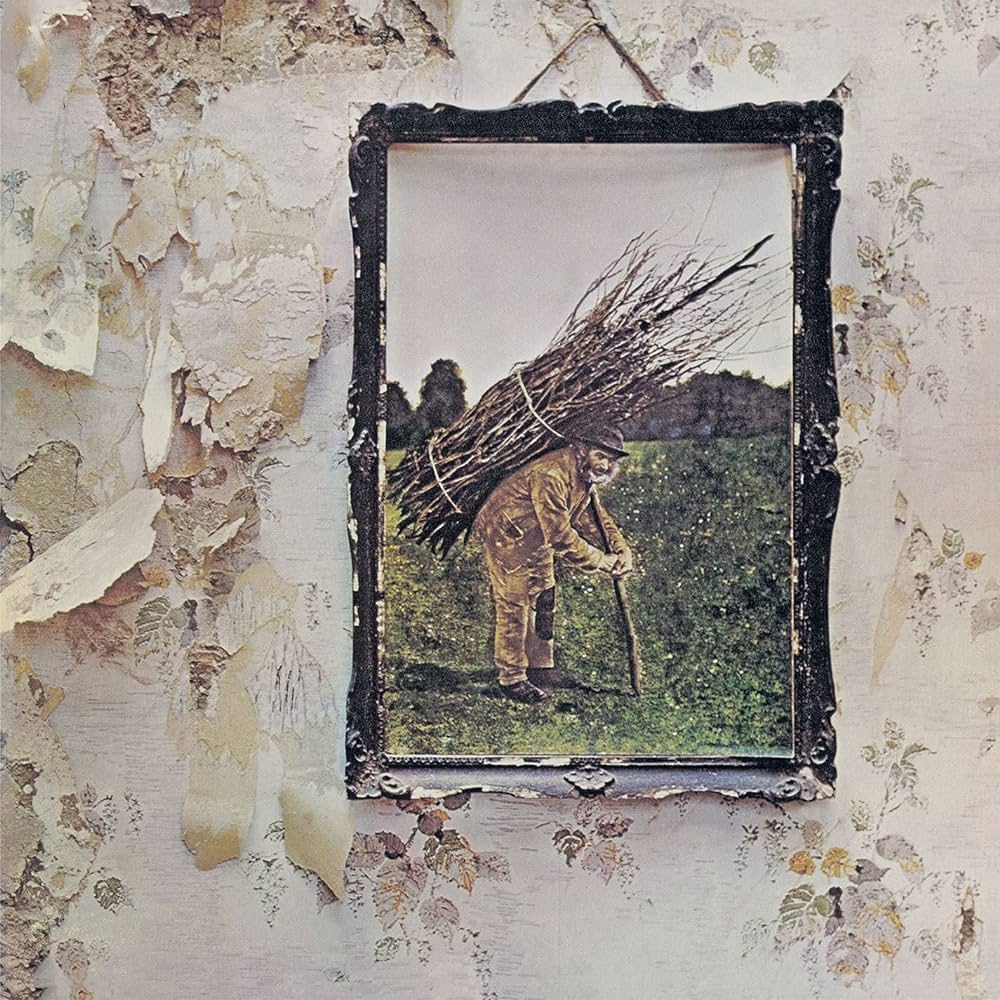
A few months ago there was a story in the New York Times which reported that the man pictured on the front cover of “Led Zeppelin IV” had been identified. He was Lot Long, a Victorian-era thatcher from Wiltshire. His photograph was one of many taken by a man named Ernest Howard Farmer in the Shaftesbury area, near Dorset, and it’s been speculated that he then used those black-and-white photographs to “teach colorizing to his students”.
That would make sense because, as the story goes, Robert Plant and Jimmy Page bought the now-famous colour photograph at an antique shop. For the album cover they taped the photograph to the flaky wallpaper of a dilapidated house and voilà, a piece of music history was born.
The story was interesting by itself, but the timing of it was convenient because it refreshed the image in my mind for when I later browsed through some vinyls. I had decided a few weeks ago to get back into vinyl records so I returned to where the interest started: dad’s record shelves. It was a decent collection for someone who grew up in a Communist country with limited access to Western records: a few classic rock albums (Beatles, Dire Straits, Creedence), a hefty amount of jazz and classical music (everything from Brubeck to Bach), about a dozen local artists and a bunch of audio theatre and corny comedy albums from the ’80s. But among them there were also a few prized Led Zeppelin albums. Either imported or smuggled from Russia, they included a copy of Led Zeppelin IV, which caught my attention because the cover was… unique in its own way.
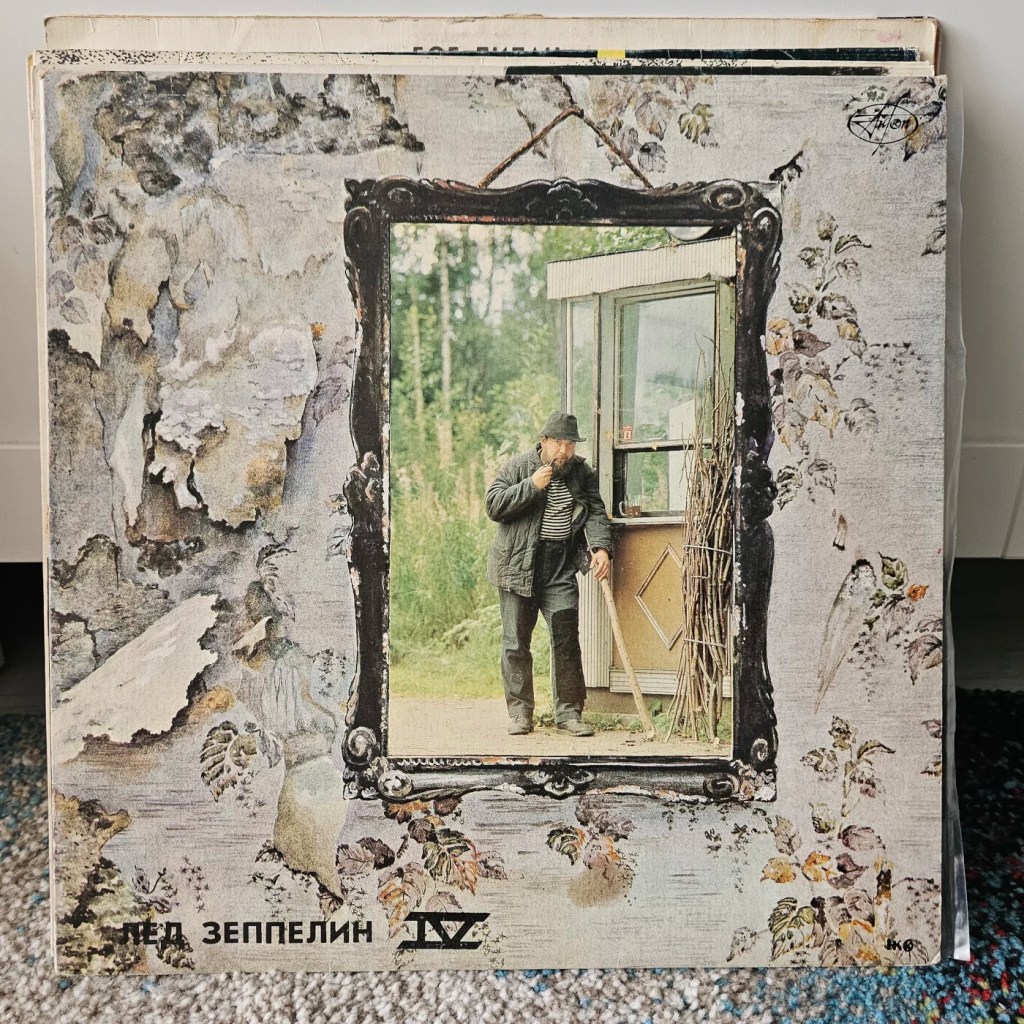
This wasn’t the only odd one on the shelf, but it stood out. Who was that man? Why is he posing next to a rural telephone box? He’s got a bunch of branches as well, is he a thatcher too like Lot Long? I went searching. The first thing I found out was that this album is one of several bootlegs from AnTrop, a record label from St. Petersburg.
Initially, AnTrop was an unofficial label founded by Andrei Tropillo in 1979, mostly releasing albums of local rock bands. Later on, Andrei was hired by the state label Melodiya and managed to publish official albums of bands which had, until then, mostly survived underground. Keeping up with his rebel spirit he also didn’t always get approval from the musicians beforehand.
In this new position and with a belief in freedom of arts and piracy, Andrei pushed on within a legal grey area. He recorded “legal broadcasts” of albums from bands in the West (Beatles, Zeppelin, Stones, Sabbath etc) and pressed them on vinyl. Since there were major gaps in the copyright legislation, these managed to get released and sold without breaking any law. And with a lively underground market, some of them got further, reaching even my dad’s collection in Romania.
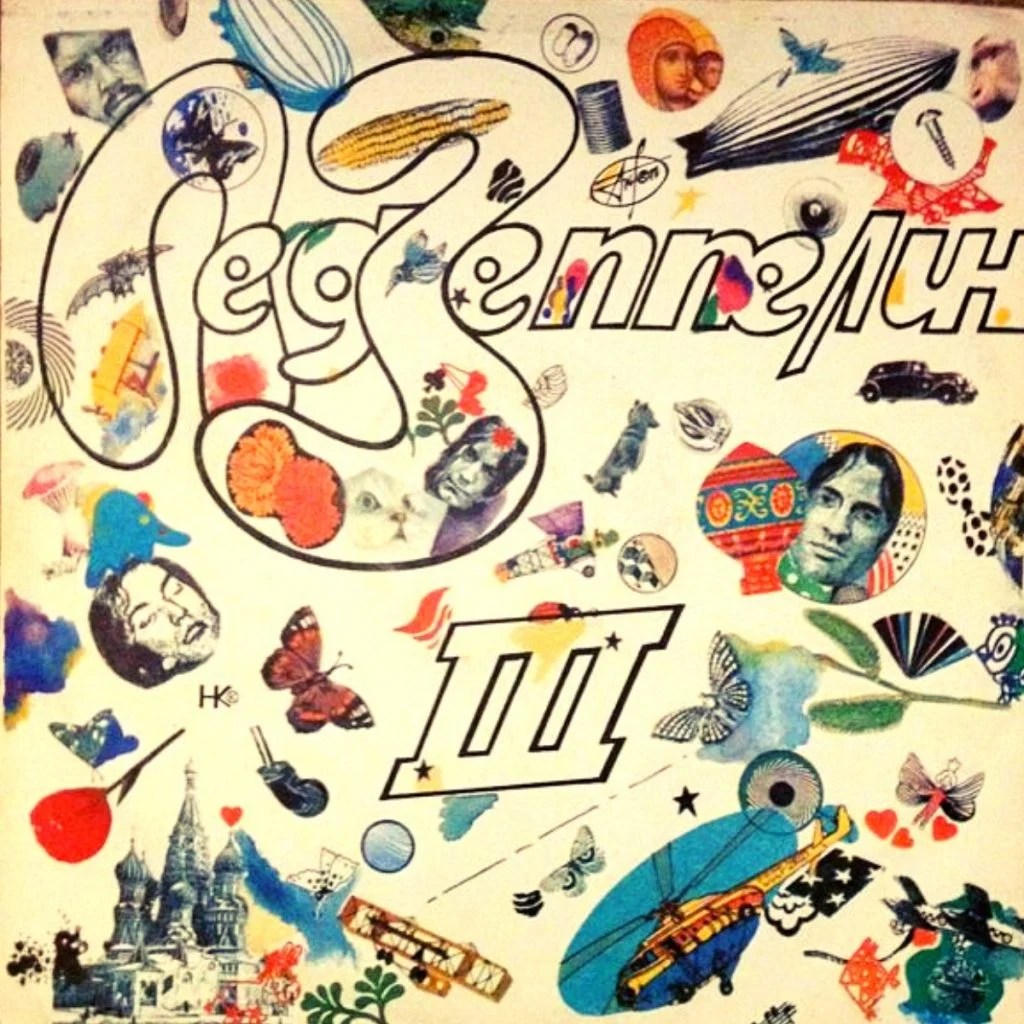
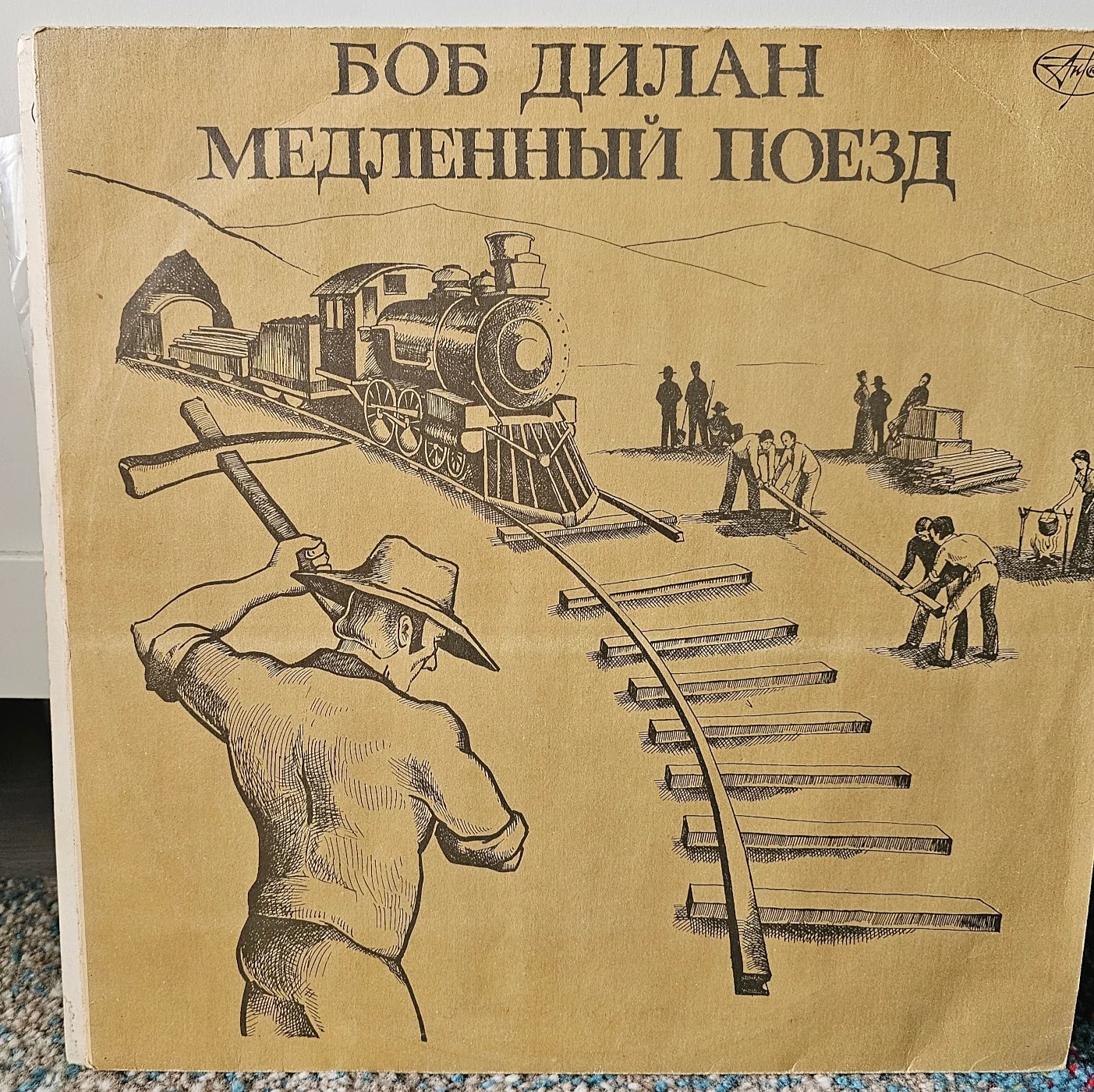
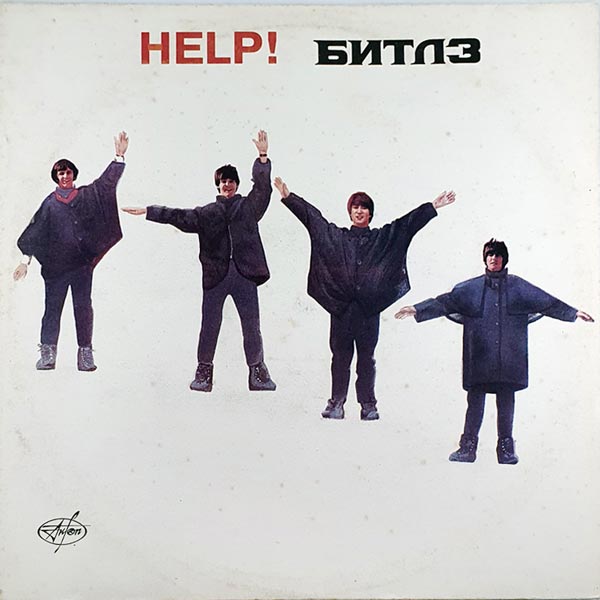
A keen observer will notice that all album covers are altered from the original. As mentioned, these were in a legal grey area, so funnily enough it was not the distribution of the music that could have been a problem but the album covers themselves. As such, Andrei Tropillo created modified versions of the originals to bypass those laws as well. Sometimes this meant editing the colours and contrast, other times it involved removing Karl Marx from the Sgt. Peppers album and adding the music historian Kolya Vasin instead; on that same cover Tropillo’s face is pasted on someone in the crowd.
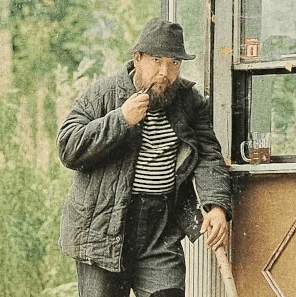
In the case of Led Zeppelin IV, where my whole search began, I thought I reached a dead end as he was only described online as a “somewhat famous painter”. But fortunately I found out the man is Dmitry Shagin, a painter and friend of Tropillo.
Andrei Tropillo passed away in April of this year. He had been a supporter of piracy until the end, as it had been the only way for information to pass freely in those times. While that kind of censorship has passed, we can always fight for a free and fair flow of arts and ideas. Or, if nothing else, to at least add our own twist to that flow.








 Seb's Web
Leave a comment