

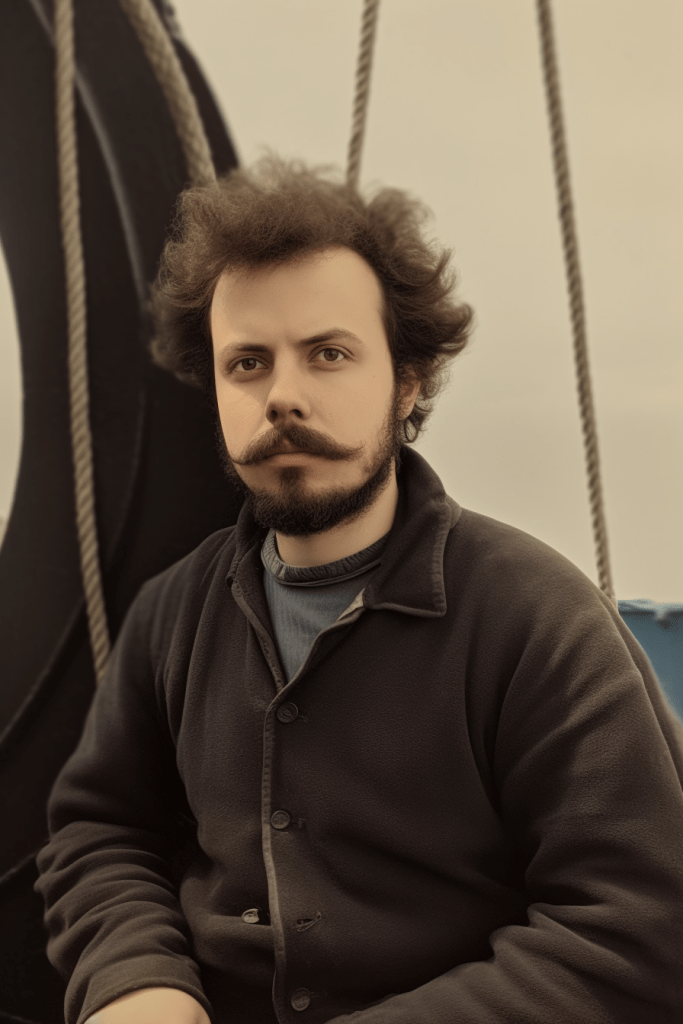
(Pictured: Georges Perec)
Approches de quoi (Approaches to what)
That is the title of Georges Perec‘s 19731 essay that first mentioned the infraordinary. In different ways, and with different levels of confidence, we are both trying to get our bearings through writing, which is to say trying to locate ourselves inside the ordinary without immediately escaping it.
Before going any further, it helps to answer a few basic questions. For anyone reading. And, more importantly, for myself.
The structure of these posts will remain consistent. Each will begin with a Brief: a compact idea drawn from the infraordinary. Because this concept runs adjacent to other, now-familiar territories such as psychogeography, mindfulness, slow living, analog life, and deliberate attention, there is no shortage of connective tissue to explore later. What follows the Brief may expand on its idea, or it may simply collect infraordinary moments, objects, or observations without forcing them into coherence. Not everything needs to resolve into an argument to be meaningful.
So first things first. What, exactly, is the infraordinary?
1. Brief
Perec opens his essay with a tone that is not angry so much as exhausted. He directs this fatigue at the daily news and at our collective dependence on the sensational. His diagnosis is disarmingly blunt. In our constant pursuit of the extraordinary, of headline events, crises, disasters, and spectacle, we learn nothing. The meaning is not there, and the lessons never change. Things happen. Things pass. Life continues.
The daily papers talk of everything except the daily. The papers annoy me, they teach me nothing. Has the newspaper told us anything except: not to worry, as you can see life exists, with its ups and its downs, things happen, as you can see.
For Perec, this chase does not heighten experience but compresses it. It pulls our attention away from our own lives and leaves us oddly estranged from the environments we actually inhabit. We become fluent in drama while remaining illiterate in the texture of our days.
His response is simple, almost suspiciously so. If you want to understand what matters, or at least remain in contact with it, stop staring at the fireworks and look down. Look at the carpet under your feet. Look at the spoons in your drawers. The real density of life is not located in rare events but in routines, gestures, objects, and tiny rhythms that go unnoticed precisely because they feel too familiar to be interesting. Perec proposes a disciplined curiosity about the everyday, a conscious refusal to overlook the things we constantly trip over without seeing because we are busy scanning the horizon for spectacle.
What’s needed perhaps is finally to found our own anthropology,
one that will speak about us, will look in ourselves for what for
so long we’ve been pillaging from others. Not the exotic any more,
but the endotic.
Like I said, this sounds close to mindfulness, or the politely hollow advice to stop and smell the roses. But taken seriously, it reaches further and cuts deeper. It means paying attention to your home, the people in your life, and the minor details that quietly scaffold your days. It means withdrawing, at least intermittently, from distraction and noticing the machinery of the attention economy pressing in from all sides. It means choosing to focus on what actually teaches and enriches, perhaps even attempting to recover something like a child’s alertness, minus the naivety.
To question what seems so much a matter of course that we’ve
forgotten its origins. To rediscover something of the astonishment
that Jules Verne or his readers may have felt faced with an
apparatus capable of reproducing and transporting sounds. For
that astonishment existed, along with thousands of others, and it’s
they which have moulded us.
The infraordinary also involves looking behind the spectacle. This becomes especially visible in media, where beneath the headline there is often a condition that is treated as natural, inevitable, or unworthy of scrutiny. While Perec is frequently described as left-leaning, his stance reads less as ideological allegiance than as an allergy to dogma. The essay is playful, but it has teeth, and at times it edges toward something openly anarchic:
In our haste to measure the historic, significant and revelatory,
let’s not leave aside the essential: the truly intolerable, the truly
inadmissible. What is scandalous isn’t the pit explosion, it’s working
in coalmines. ‘Social problems’ aren’t ‘a matter of concern’ when
there’s a strike, they are intolerable twenty-four hours out of
twenty-four, three hundred and sixty-five days a year.
So how do you actually do this?
Perec never quite tells us. He leaves sketches of a method, provocations, exercises, lists. The rest is deliberately unresolved. That openness is not a flaw but an invitation, and it is where the Infraordinary Fieldnotes begin. This is an anthropology we are not meant to inherit fully formed, but to assemble ourselves.
To question that which seems to have ceased forever to astonish us. We live, true, we breathe, true; we walk, we open doors, we go down staircases, we sit at a table in order to eat, we lie down on a bed in order to sleep.
How? Where? When? Why?
Describe your street. Describe another street. Compare. Make an inventory of your pockets, of your bag. Ask yourself about the provenance, the use, what will become of each of the objects you take out.
Question your tea spoons.
What is there under your wallpaper?
How many movements does it take to dial a phone number?
If this all sounds trivial, that reaction is not only expected but essential. The point is not to reject the spectacle outright, but to widen the frame so the infraordinary is no longer excluded by default.
It matters a lot to me that it should seem trivial and futile: that’s exactly
what makes it just as essential, if not more so, as all the other
questions by which we’ve tried in vain to lay hold on our truth.
2. Quotidien
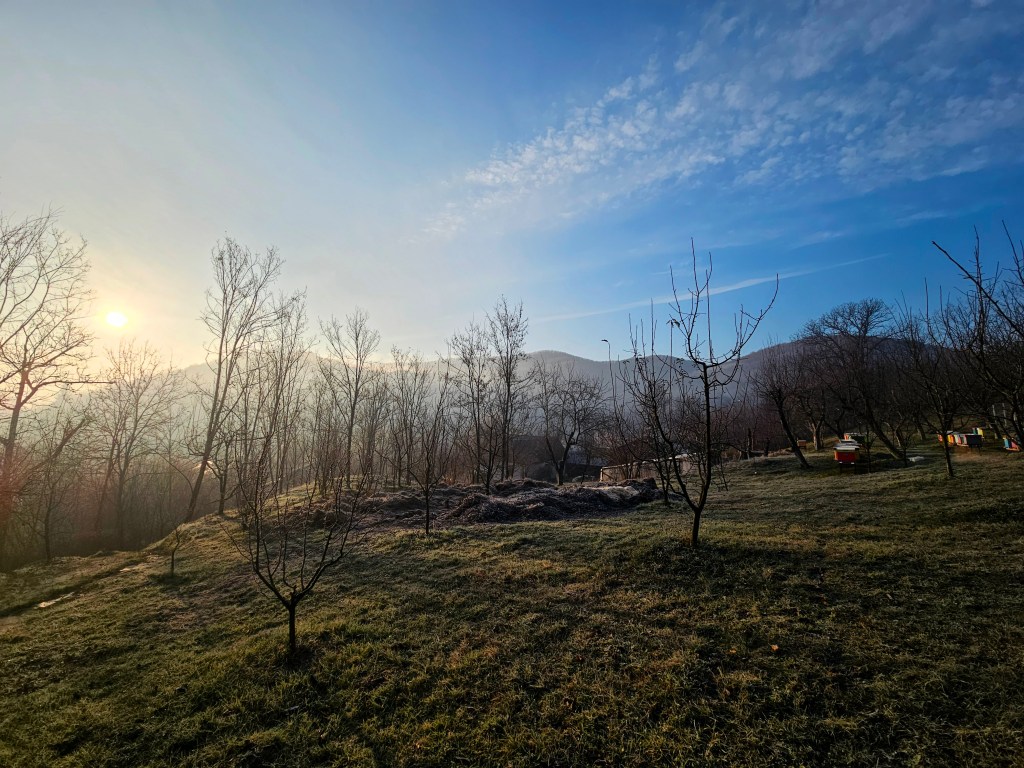
This is the part that warms up the observational muscle, so to speak. Perec once spent three days in Saint-Sulpice Square in Paris, noting down every unimportant detail he could observe. I’ve done an experiment like that a few years ago, about which I’ll write in detail another time. I’ve been sitting on this post’s draft for far too long so, using my philosophy that “half-assing it is better than not doing it” (was that Homer Simpson’s motto actually?), I’ll write a few observations from the weekend I spent in the countryside recently.
the rooster that crows at 8PM
bee poop on the hive’s sill
a hole in the metal fence
a path from the hole made by wandering animals
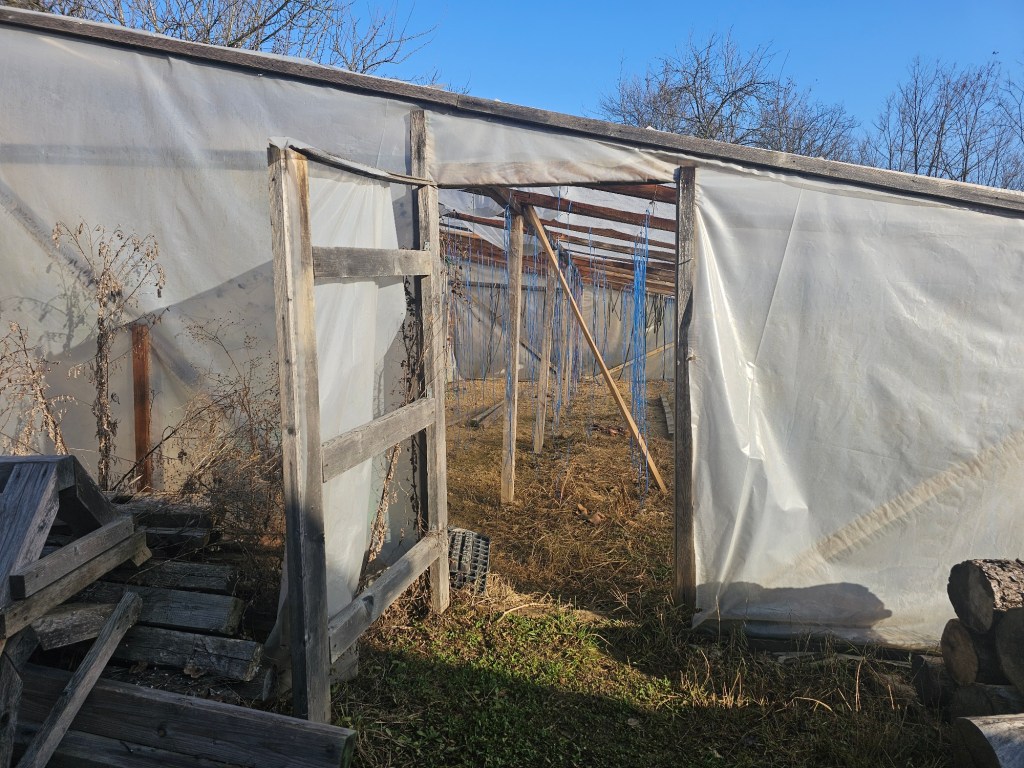
empty strings in the greenhouse – no tomatoes in the winter
lingering smoke smell from the fireplace
old espresso machine with green film in the water tank – comes out with vinegar
13 freshly planted plum trees
jet plane’s sound breaking the morning silence
rooster doesn’t crow at 8AM
only insect for the day: a beige ladybird
cat with white socks and bobtail
dad’s old office nameplate nailed to his shed door – retirement “office”?
sardine can used as ashtray
clothesline with 9 clothes-pins
wild hazelnuts on the ground – squirrels be advised!
fewer molehills than usual – I remember dad catching the mole a month back
“desire path” breaking off from stone path – seemingly going nowhere?
4 log piles scattered around the terrain, seemingly no reason for them
plush owl inside – looks like the Duolingo owl but in yellow ochre
3 types of instant coffee – I brought a fourth since I didn’t expect the espresso machine
4 types of sweetener
Since I didn’t take any notes, these are just from the top of my head, or details I noticed from the photos I took. I’ve (re)discovered that it’s actually quite a fun undertaking to catalogue random and insignificant things. It’s like playing the role of a reverse Sherlock Holmes, where I already know the big picture so now I’m hunting for meaningless clues.
3. Map Fragment
The Map segment attempts to trace a place, to document it, to scan its anthropology. It seems to me that since Homo Sapiens has always been connected to its surroundings, we should pay attention to these surroundings today as well. Perhaps even more so. How “human” is this location? How lived-in? What are the smells? What pollutes it? What’s missing? Where do your eyes drift naturally? Where do your footsteps take you naturally? Why? Why not?
There are countless questions you can ask just walking around a square or on a street. Instead of letting Google Maps take you, raise your eyes and explore, see where the street actually wants to take you. Ask questions. Note your answers and how you feel about them. If you have a body, and most of us do, it will certainly be geographically placed… somewhere. Be aware of that somewhere and how you connect to it. This whole field of psychogeography is something we will also revisit later in this series. But until then, let’s attempt a quick mapping of, say… the same place as before, my parent’s countryside home.
The whole village is in the Sub-Carpathians, on a hillside. The main winding road splits the village in half – high and low. This terrain is on the high side.
Once you open the gate, you can only climb. The yard is also split in half by an invisible line that connects the house, the stone grill and the outhouse. The bottom part of the yard has winding paths and unkempt plants and flowers; the upper half is more organized for fruit trees and growing vegetables.
An almost constant smell of burning wood – a reminder that most people here still rely on it for cooking and heating.
Passing the house, a semi-circular stone-path traces the outer bounds of the terrain, leaving the middle of the yard for beehives, a greenhouse, vegetable plots, fruit trees.
It’s a wonderfully well thought-out path, allowing quick access to everything, while following the natural inclines.
The shape of the hill makes the yard like an amphitheater, whispers from the street carry easily. It was already hard to keep secrets in a village.
Mornings are always cool but sunny. The terrain faces south-east and the valley in the hills across allows the sun to shine on the house in the morning all year round.
Sound travels well, so your silence can easily be broken by neighbours partying or playing music.
Smell of barbecue around lunch time is guaranteed, at least one neighbour will grill something. Some whiffs of hay or manure or fermented fruit.
Other sounds can break the silence – cars, fireworks, rifles from hunters, shouts, honking, crows and ravens, hawks, axes chopping wood, chainsaws cutting trees. Sometimes a helicopter might pass, carrying people injured in the mountains.
4. Element
Section 4 is dedicated to one single object or detail.
I didn’t take a picture of it, unfortunately, but the sardine can ashtray was funny. It’s been standing by the grill for what must be weeks, probably. It’s got rust and grime on it, and of course gritty ash inside. I’ve no idea if my parents ate the sardines or if the cats were lucky and they did. In a way it’s very comical; while they no longer open using the old rolling key, it’s such a classical piece of junk. No cartoon trash pile is complete without the sardine can, the fish skeleton and the old piece of lettuce. Sitting here the can looks absolutely at home – a piece of junk recycled for further use. I just hope a mouse doesn’t steal it for their bed.

… Well, this is awkward. This post was supposed to have a few more parts but I’ve been putting off finishing it for so long that I’ll just skip them this time. Who knows, maybe they were forced anyway, I’ve written the most important part and I should just do my homework better for the next one.
“Question your teaspoons!”
- It was published as well posthumously in 1989 in the collection “L’Infra-ordinaire“, with other related texts. It is also often published with “An Attempt at Exhausting a Place in Paris“. ↩︎







 Seb's Web
Leave a comment